I’ve been thinking lately about where drugs get their names and what’s wth the wacky drug commercials. The sources for the topic of drugs is from International Business Times, Economist, and CNN. I will begin with drugs and how the they get their names. I think many sound bad and their commercials even worse. If you question why I’m saying this, check out the one below. The Chantix commercials aren’t much better either, but at least when I saw them it had Ray Liotta.
Surprisingly, there is a method to naming drugs. There are rules to follow as instructed by the US Food and Drug Administration (FDA) for patented medicines and their generic brands. Have you wondered how drugs get their names? Here is a brief overview. Every drug has three names: chemical (let’s all agree consumers don’t really care about this too much), generic (consumers somewhat care about this), and brand (I’d say consumers pay attention to this the most because it’s the most recognizable). The biggest thing drug companies want are original drug names, but not too original. They want names that make sense, easy to pronounce, and have differentiation with other drug names. This is where creative agencies are pulled into the naming process and cost between $250,000 to $500,000 and take up to 24 months. This name is too similar to that name or this name is too exotic sounding are two things they aren’t looking for. Other things to keep in mind is not overstating a drug’s effectiveness or stigmatizing those taking the medication. The FDA has two departments, The Center for Drug Evaluation and Research and the Center for Biologics Evaluation and Research, which accepts or rejects proposed medication names. Their purpose is to lower the errors made when prescribing drugs. The process starts with thousands of name possibilities and finishes with the most promising, and then nine are tossed out and one name is chosen. Think Celebrex, Viagra, OxyContin, Nexium, and Tamiflu.
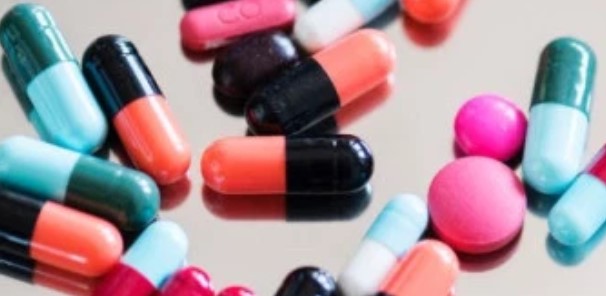
Have you ever bought the generic brand to save money? I have and some medications work just as well. Other times I should have bought the more expensive brand. The most recent encounter of this is cough drops. Halls and Ricola are way better than the generic brands. I used to hate any kind of cough drops except Ludens because let’s face it, they are basically candy disguised as a cough drop. Now, I prefer the strongest kind of menthol cough drop made by man. I have a whole bunch of generic cough drops sitting in my bottom drawer. As a friend of mine says “it’s ass.” Yeah, it is. They don’t really help my coughing when my sinuses are draining. I will buy the generic equivalent to Advil, but not the Advil PM although I’m more prone to taking Melatonin now. Those ending in vir, mab, onide are indications they are generic. These drug names are approved by United States Adopted Names (USAN) and World Health Organization (WHO). While the pill will look different, it will have the same dosage, strength, stability, quality, safety, and route of administration. It should work the same way and offer the same benefits. The FDA reviews these medications with the same amount of attention as patented drugs. Have you ever wondered by generic medicines cost less? It’s because they don’t have the same standards when it comes to repeated animal and clinical studies. Therefore, less animals are harmed and the application process (ANDA) from start to finish takes less time. Another positive to using generic drugs is it saved the U.S. healthcare system $1.67 trillion from 2007 to 2016 according to the IMS Health Institute.


Leave a comment